

In June 2026, I got the opportunity to travel in southern Spain, meeting some of our hotel and service providers. My route followed a number of itineraries from our tours, and I wanted to share my incredible journey across an area of Spain I have never previously explored.
Southern Spain is a region where history, architecture, food and landscape come together with remarkable ease. From the Roman legacy of Córdoba to the grand plazas of Seville; Carmona's hilltop serenity to the layered heritage of Granada and the coastal elegance of Málaga, my journey offered a rich cross-section of Andalucía at its most memorable. The region benefits from interconnected train journeys, high-speed trains and scenic roads, showing just how easy it is to move between these major cities.
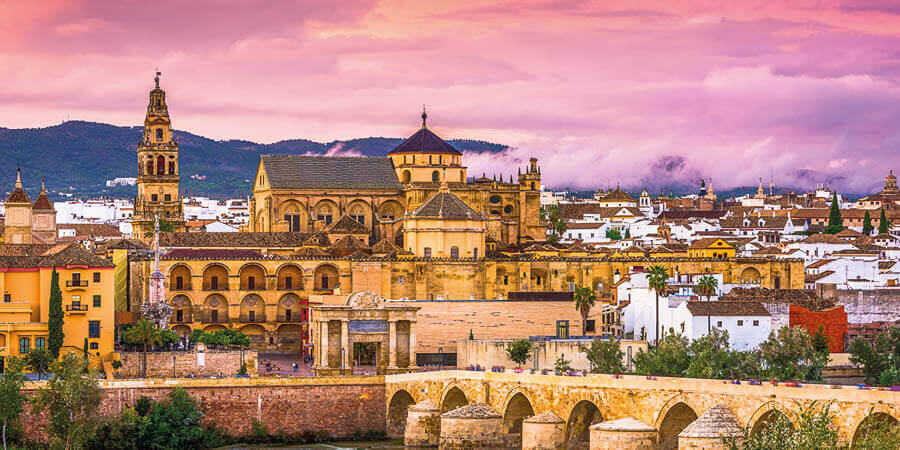
Córdoba: Roman legacy & timeless streets
One of Andalucía's most evocative cities, Córdoba has been shaped by Roman, Islamic, Jewish and Christian influences over many centuries. Once the capital of Roman Hispania Ulterior and later one of the great centres of the Islamic world in medieval Europe, the city still carries that layered identity in its streets, walls and monuments. Walking through the old centre, the atmosphere is intimate and historic, with small squares, narrow lanes and views that constantly remind you of the city's long past.
Staying at the Hesperia Córdoba adds a strong sense of place to the visit. The hotel's rooftop views are superb, looking across the Roman Bridge and towards the old city, with the Mezquita mosque-cathedral standing out as one of the most extraordinary landmarks in Spain. The bridge across the Guadalquivir gives one of the best approaches into the historic centre and creates a fitting entrance to a city so steeped in history.
The Mezquita is the defining sight in Córdoba and is every bit as impressive as its reputation suggests. Its vast courtyard, orange trees and impressive walls create a calm prelude to the architectural scale inside, where the layered story of the mosque and cathedral is visible at every turn.
Córdoba also rewards slow exploration, especially in the smaller streets and squares where the city's quieter character comes through.
Dining added another memorable layer to the stay, especially at Montevideo, a steakhouse in the former home of a matador. That kind of setting fits Córdoba perfectly: historic, atmospheric and rooted in local identity.

Seville: Moorish grandeur & traditional tapas
Combining monumentality with warmth, Seville has long been one of Spain's great historic centres. Shaped by Roman foundations, Moorish rule, Christian reconquest and centuries of trade, wealth and cultural exchange, has resulted in a city full of palaces, churches, tiled façades, gardens and squares, where every walk reveals another layer of history.
A walking tour is the best way to experience Seville properly, especially with a guide like Manuel, who was also a professor of historical art. His knowledge helped bring the city to life in a way that went far beyond dates and names, connecting architecture, materials and urban form into a much fuller understanding of the place. The route through the city can include the Plaza de España, one of Seville's most recognisable landmarks, as well as the many gardens and squares that make the city feel open, elegant and walkable.
Seville's orange trees are part of its identity. They line streets and squares throughout the city, and locals can help themselves to the fruit, which is usually sour and therefore better suited to marmalade than eating fresh. The city's buildings are also famously decorated with ornate and colourful tiles, which give Seville a visual richness. Those tiles became such a defining feature because clay deposits from flooding rivers were used in local production.
Among the key sights are the cathedral, the resting place of Christopher Columbus (apparently there are two more resting places, yet to be confirmed), and the palaces and churches that reflect Seville's long religious and political importance. The old city walls are no longer intact as they were taken down over time, but small remnants and traces of historic aqueducts and water systems can still be found if you know where to look - or have an expert local guide. That sense of history being present but partly hidden is one of Seville's great pleasures.
Lunch at El Rinconcillo is another highlight. Founded in 1670, it is one of the oldest bars in Seville and a genuine institution. Serving authentic tapas and regional dishes, this historic atmosphere makes eating there feel like you're part of the city's living story.
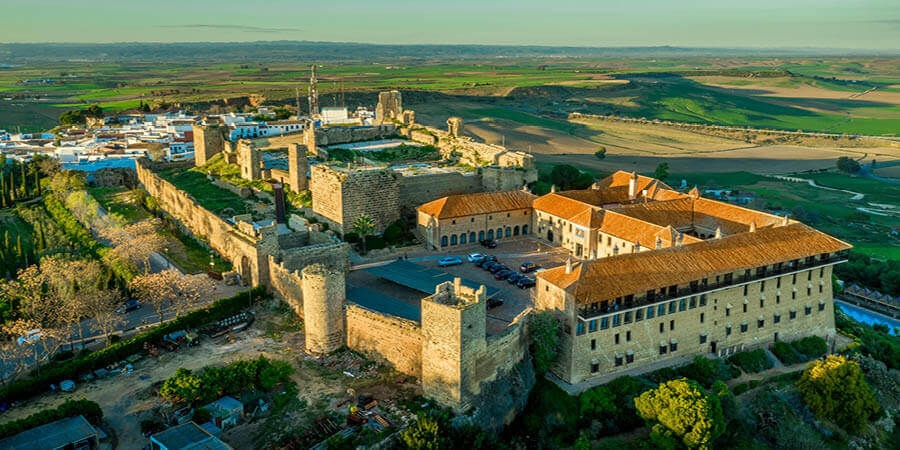
Carmona: Hilltop calm & Andalucían horizons
Quiter than Seville and Córdoba, but no less historically significant, Carmona is positioned above the surrounding countryside. Important from Roman times onwards, the town's long history can still be sensed in its layout, buildings and views. It has the feel of a place that has watched the centuries pass from a strong strategic position.
The Parador de Carmona is one of the most memorable places to stay in Andalucía. Set high above the plains, it occupies an imposing former fortress and offers spectacular views across the vast landscape below. Looking out from the top, the sense of openness is extraordinary: the plains stretch away in every direction, creating one of the most striking panoramas in the region. The atmosphere changes constantly with the light, making it especially rewarding at sunrise and sunset.
One of the most interesting modern contrasts is the solar power installation visible in the distance. It glows almost like a beacon in the landscape. It is an unexpected but fitting reminder that Andalucía is not only a land of ancient history but also of modern innovation.
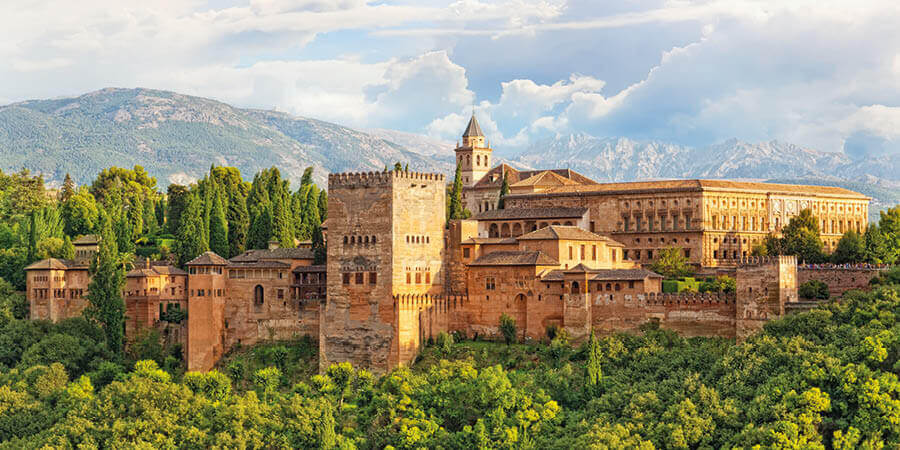
Granada: Walking through Moorish splendour
Granada's appeal lies in the intensity of its history and the beauty of its setting. The city was the last stronghold of Muslim rule in the Iberian Peninsula, and that legacy is everywhere in the architecture, layout and atmosphere. It is a city of steep streets, historic quarters, views of the Sierra Nevada and, of course, the Alhambra.
The Hotel Palacio de Santa Paula is a remarkable place to stay, with a history that adds greatly to the experience. It combines a former Moorish house with the later Convent of Santa Paula, and its cloistered, historic character makes it feel like part of Granada itself rather than simply accommodation. The building's layered past is one of its biggest attractions and reflects the city's own blended history.
Granada itself offers plenty to see beyond the headline landmarks. The Alhambra remains the essential visit, but the city is also full of atmospheric old quarters, viewpoints, churches, gardens and pedestrian streets that reward a slower pace. The medieval Moorish quarter, the Albaicín, offers particularly fine views of the Alhambra from its steep lanes and hilltop outlooks, while the city centre has a lively energy that balances the more contemplative historic sites. It is a city that stays with you because its beauty feels both dramatic and deeply rooted in history.
Málaga: Artistic flair by the sea
With an exceptional collection of galleries and museums, Málaga combines culture with coastal views. It has an ancient past too, founded by the Phoenicians and later shaped by Romans, Moors and Christians. That mix of history and modern energy makes it one of Andalucía's most appealing cities.
The Parador de Málaga Gibralfaro is a strong example of why the city works so well as a destination. Its elevated position gives superb views over the bay, port and rooftops, making it an ideal place to appreciate the city's scale and setting. The hotel also sits close to Gibralfaro Castle and the Alcazaba, so it connects naturally with the city's historic core.
There is plenty to see in Málaga beyond the views. The Alcazaba and Roman theatre are essential stops, while the cathedral, old town streets and harbour area show how comfortably the city combines heritage with a modern Mediterranean feel. The promenade and waterfront are also a pleasure to explore, especially after time spent inland, because they bring the journey to a relaxed and atmospheric close. Málaga works particularly well as a finale because it offers both culture and coast in a single setting.
Spain's historic Parador hotels
One of the real pleasures of travelling in Spain is the chance to stay in a Parador, part of a remarkable national network that has made heritage buildings part of the travel experience itself. Since its creation in 1928, the Paradores group has focused on preserving significant historic sites and adapting them into hotels, which means a stay often feels as much about architecture, history and setting as it does about anything else.
That is part of what makes the Paradores so memorable on our tours throughout Spain. They tend to occupy castles, fortresses, convents or dramatic natural locations, giving each stop a stronger identity and a closer link to the story of the region.
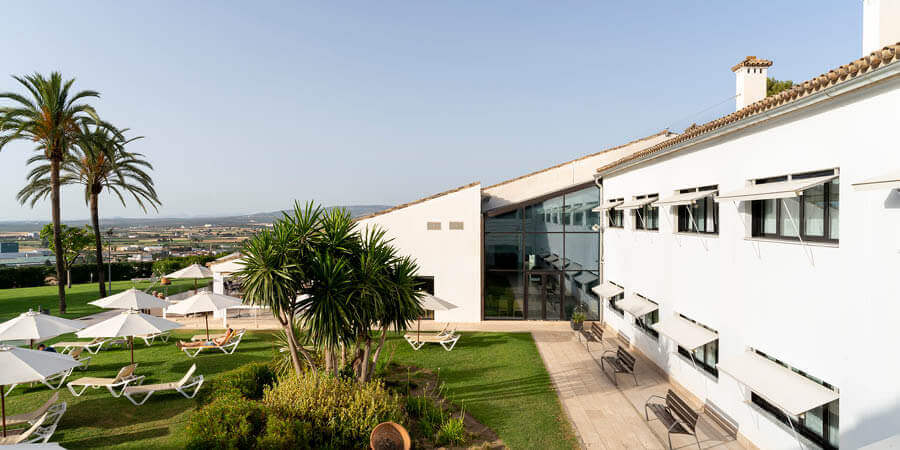
Parador de Antequera
The Parador de Antequera offered a more modern contrast to the historic stays elsewhere on the trip, and it made an excellent base for exploring the wider region.
Its location was especially practical, with easy access to surrounding sights. Dinner on site was memorable for the view across the vast plains and mountains, pierced with the impressive high-speed rail line in the distance. At breakfast, the same landscape looked wonderfully different, with the outline of the hills resembling a figure lying down, giving the stay a calm and slightly unexpected sense of place.
Parador de Jaén
Parador de Jaén deserves its own place in my journey because it captures so much of what makes the Paradores special. It stands on Santa Catalina hill beside the archaeological and castle complex. This position has been strategically important since ancient times, with origins linked to Phoenician settlement and an 8th-century Moorish fortress later expanded after the Christian conquest of Jaén in 1246.
Jaén has long been seen as a gateway to southern Spain, and historically it was also a frontier city between Christian and Muslim territories. That strategic role helps explain why the hilltop site matters so much, and why the views from here feel more than simply scenic: they speak to Jaén's long history as a place of passage, defence and connection.
The Parador itself is known above all for its peace and outlook. From its elevated position, the views stretch across the Guadalquivir Valley and the surrounding mountain ranges, and there is a real sense of stillness that makes it feel set apart from the everyday world below. It is one of those places where the quiet is part of the luxury, and where the panorama gives the stop an almost contemplative quality.
Uncover Andalucía with Great Rail Journeys
Great Rail Journeys offer a number of tours that feature destinations and experiences detailed in this blog.